This past Sunday I spoke on a swath of Mark 11. There were many thoughts I didn't get to, but this one in particular felt important enough to circle back on.
After seeing the fig tree withered from no more than Words, the disciples were understandably impressed. Jesus went on to explain they had the same capacity for great things, despite their not being the faith heroes who occupied Temple ranks. Then he says in v24,
". . . I tell you, whatever you ask for in prayer, believe that you have received it, and it will be yours."
All historic misapplication and manipulation aside, it's a strange verse. I've never known anyone who believes Jesus can be taken literally about our ability to, on a faithful whim, toss geography with our will. Especially since he never himself demonstrated these abilities. Yoda force lifted the X-Wing from a swamp to demonstrate the impotence of Luke's faith and that size matters not. Jesus, being non-puppet, wasn't as much into tricks.
Peter Rollins talks about desire and our understanding of "Heaven" being a place where we are changed. As he points out, there is one peculiar exception to the transformation we seem to anticipate for ourselves, and that is the way we desire. As we are transformed into resurrected beings, free from all that shackles us in our current state, our desire as many of us seem to understand, will remain intact.
I've given this much thought and have noticed how prevalent it is within uncriticized thought about the rewards of faith.
Many of us hope to be someday blessedly free of disease, living in something like a mansion in the sky.
We will experience rest from our toils, enjoying endless luxury.
We will have our health and sanity, and every good and sumptuous thing.*
But it's worth considering that, perhaps alongside the end of suffering there might also, or even more so, be a transformation of our desires. That perhaps part of what a heavenly end to suffering might mean is a fundamental change in how we want. With this perspective we could ask: what would our existence be like no longer believing there's more joy to be found in what's represented by "mansions", opulence and endless supply? What if our bodies, minds and even the way we want all transform to such a glorious extent that we would, in that instant of total transformation, find ourselves as having been, all along, in the midst of the very Heaven we thought we had to escape to before? In other words, what if desire resurrects, and on "the other side" the last thing we would ever want is what our current, unressurected desire thinks it wants now? (!)
The alternative, I fear, may be that heaven is a place where our materialism, excessiveness and immaturity are forever rewarded. I wouldn't be the first to, after a moment's thought, recognize that might be Hell after a few weeks there.
". . . I tell you, whatever you ask for in prayer, believe that you have received it, and it will be yours."
To what "you" is Christ referring? To which "you" is Christ making this promise? The one that becomes anxious when he doesn't get what he wants, even though he doesn't know why he wants it? The one that can't see the whole picture and still has the urge to defend what he knows to be his own broken perspectives on "how things ought to be"? The child who thinks the things it desires are its source of life?
Or does Christ speak to a version of me still not realized. A yet-to-be-born version of me, one that will someday know peace fully, one whose inner wars will have been resolved and therefore no one will be blamed or be given a shred of power over my own joy. One that desires little, for contentment has taken over.
It pains me to say it, but I hope Christ doesn't say yes much to my prayers. Even when I really mean it. Not for a long, long time to come, anyway.
*You may recall a decade back the Islamic Jihadists reportedly believing martyrdom would get them 72 virgins in paradise. This is only slightly different than some Christian conceptions about "what happens to us after we die."
Tuesday, September 3, 2013

Monday, August 26, 2013
Kids Saying the Damned-est Things
A friend told me of an event he attended this past weekend where he saw an eight or nine-year-old armed with a megaphone and preaching fire and judgment to passersby. An adult, ostensibly his father, filmed him proudly as the little boy yelled Bible quotes into all manner of nuanced adulthood. A decade old, likely not yet acquainted with the confusion of a first crush or financial disappointment, calling his world into account.
I've seen documentaries and news stories where children are thought especially blessed by God for preaching (and screeching) with bold, knowing charisma beyond their years. Tearful adults remark with disbelieving shakes of their heads. "He's got that Holy Fire!" Sometimes it's cute. Except when it's not. Those other times it's rather sad.
I believe children hold a very special place in the world and are far more valuable than most of them are ever treated. We often overlook them in deference to our grown-up rat race. In doing this, everyone -kids and adults- misses out on life. Christ, as we've heard, went so far as to say to a child-ignoring first century palestine that the Reign of God belongs to children, despite (and perhaps because of) their very inability to earn it. Yet I don't fully understand how yelling at strangers before you know how the world works, let alone how it should work, is considered inspired. Children always yell about the world not being according to their preferences. We call it whining. Why when tucked into a miniature suit and accompanied by a Bible and amplification is it something from the great beyond?
When Jesus was twelve, his parents left him in Jerusalem on accident. They'd assumed he was in their friends' minivan or something. Going back and retracing their steps, they found him hanging out in the temple with religious leaders and scholars. And their minds were blown. Why? Because Jesus asked great questions. The second chapter of Luke records amazement not in what Jesus preached, but in his ability to interact with the ideas, to listen and ask follow up and clarification, to involve himself in the exchange rather than distance himself in order to conquer.
Jesus made his mark by being an inquisitive presence, not a declarative one.
Kids with megaphones judging things they don't understand typically only become taller with time. There's not much maturing available for those who see faith as the declaring of how things ought to be irrespective of their own ignorance. Making statements instead of conversation is probably not a phenomenon powered by Christ, but by a desire to control and complain one's own kingdom into view. I'm saying this isn't really age-specifc.
I'd like to see kids celebrated for listening and wondering and remaining humble. While we're at it, let's celebrate those things in every stage of life in which we find them. Let's call that charisma.
I've seen documentaries and news stories where children are thought especially blessed by God for preaching (and screeching) with bold, knowing charisma beyond their years. Tearful adults remark with disbelieving shakes of their heads. "He's got that Holy Fire!" Sometimes it's cute. Except when it's not. Those other times it's rather sad.
I believe children hold a very special place in the world and are far more valuable than most of them are ever treated. We often overlook them in deference to our grown-up rat race. In doing this, everyone -kids and adults- misses out on life. Christ, as we've heard, went so far as to say to a child-ignoring first century palestine that the Reign of God belongs to children, despite (and perhaps because of) their very inability to earn it. Yet I don't fully understand how yelling at strangers before you know how the world works, let alone how it should work, is considered inspired. Children always yell about the world not being according to their preferences. We call it whining. Why when tucked into a miniature suit and accompanied by a Bible and amplification is it something from the great beyond?
When Jesus was twelve, his parents left him in Jerusalem on accident. They'd assumed he was in their friends' minivan or something. Going back and retracing their steps, they found him hanging out in the temple with religious leaders and scholars. And their minds were blown. Why? Because Jesus asked great questions. The second chapter of Luke records amazement not in what Jesus preached, but in his ability to interact with the ideas, to listen and ask follow up and clarification, to involve himself in the exchange rather than distance himself in order to conquer.
Jesus made his mark by being an inquisitive presence, not a declarative one.
Kids with megaphones judging things they don't understand typically only become taller with time. There's not much maturing available for those who see faith as the declaring of how things ought to be irrespective of their own ignorance. Making statements instead of conversation is probably not a phenomenon powered by Christ, but by a desire to control and complain one's own kingdom into view. I'm saying this isn't really age-specifc.
I'd like to see kids celebrated for listening and wondering and remaining humble. While we're at it, let's celebrate those things in every stage of life in which we find them. Let's call that charisma.
Thursday, August 8, 2013
Shhh.
Three weeks ago my wife Kristi and I took a hike around Jordan Pond. It's a beautiful freshwater lake in Acadia National Park, flanked with pines and mountain ridges along the coast of Maine. Two full hours of nearly four miles negotiating trails and boulders- that's some pond.
As we walked we agreed our chances of seeing wildlife would increase if we were silent. A dense white fog had descended on the lake, adding to the eerie beauty. Silence seemed right. Reverent even. So we moved along the water's edge in silence.
Only minutes later the silence was broken by a sudden explosion. Less than a yard from my feet there erupted movement and screeching and color. As it was coming from the water's edge, my mind immediately classified it as a duck. But my mouth disagreed.
"PILEATED!" I was suddenly whisper-yelling. "That's a Pileated Woodpecker!"
It flew in an arc and landed on the side of a nearby tree, its large monochromatic body instantly secured to the bark, its head red enough to shame Julianne Moore into a hat. Kristi was obviously impressed with the bird, but I now suspect she may have also been struggling to respect me as I squealed.
"Oh my gosh honey. I've never been this close!" I continued, eyes bulging.
The bird flew further up into the tree out of view. We moved closer, camera on. And that's when we heard the most terrible sound one can hear in a time like this. Other humans.
Out of the sacred, foggy trail ahead came a couple, talking about someone named Patty and product initiatives and percentages over last quarter and laughing about it all. They weren't as evil as I make them sound, but I did momentarily pray them out of existence. On impulse, as they came fully into view, I put my finger to my lips to hush them. How strange that must have been for them, a grown man and woman, hushed like children by a sylvan stranger. But it worked. They froze, staring at us while I gestured up into the tree over their heads. I whispered to them with the intensity of one informing another his foot was on a land mine.
"Sorry to be the noise police, but there's a Pileated Woodpecker over your head." He looked at me with confusion. His hand gripped his wallet. I edited myself. "It's a big bird. Woody Woodpecker without the laugh."
"Oh," said the woman on his behalf, now squinting into the branches. The man ducked his head as though we were under a helicopter. The woodpecker called out, the sound echoing into the green and white. And there we were, four people. Silent. Anticipating.
We stood this way for a full minute, until it was clear Woody had gone. With nods we finally acknowledged to each other the moment was over. Each of us walked away in solemn whispers.
I hope I never meet you on a wooded trail. But I do hope, as was reinforced for me on my July sabbatical, you understand the reverence of silence. Not just in the outdoors, but in every waking, noisy hour. All of reality is incased in silence. All of reality is brimming with the sacred, the profound, the beautiful. I confess I don't recognize but a sliver of it. I'm typically most guilty of perpetuating the distraction of noise. You and I will come to life to the degree our lives are lived in more awareness of the great holy silence inviting us in.
May our God of few words inspire you today in the quieting of your mouth and mind. May you be newly entertained by the spaces between. May you experience what can only be found in silence.
Peace.
Steve
Tuesday, June 4, 2013
Out of line, online.
When I was younger, "trolling on line" would be a way of describing fishing from a moving boat. I'm guessing that's not the primary definition anymore.
You've either read or written rude words on the internet. Probably both.
Online comment sections can be an embarrassment to our species. Facebook, each fall, seems to motivate millions to do Keith Olbermann and Bill O'Reilly impersonations. . . but with more bias. Right after a church service about kindness and grace, people tweet complaints about their Sunday brunch waitstaff like they're participating in a roast. It seems if folks are free to anonymously speak into the electronic ether, more often than not it's ugly.
But what if this is because everyone is so nice?
Do the manners and decorum we use in real life (vs. online) mask what we've known/feared to be true all along? In other words, are our attempts at refined civility in place because we know we are actually neither very refined nor civil. And when in the perceived social safety of an online forum, and the risks and consequences for being relationally reckless feel removed, are we simply letting the pent up (but untamed) beast out for a roar?
Religion plays a majority role in telling people there is an acceptable way to act without first shining unthreatened light into the interior of the actor. In fact, religion often rewards people for lying about what they are, so long as the exterior performance is in keeping with "how one should behave." We reward people for successfully hiding their interior while punishing people for being forthright. If you're a lustful person and public about it, you're anathema. But if your lustful and a good liar about it, you can serve on a board of elders that kicks lustful people out. You can even picket outside all the best strip clubs. Same with anger and cynicism and all manner of relational negativity. We can have all sorts of pent up things in us, but we don't get it out at church because the church, all too often, delights in a certain presentation, not the truth about the reality boiling beneath.
It's fascinating to consider The Seven Deadly Sins, as they are traditionally considered to be "capital" sins- meaning they serve as the origin or head of other sins. Never making it to the list is one's ability to hide the other seven under a veneer of acceptable behavior. But isn't our desire to not be seen for what we are the very head of our fallenness? Weren't fig leaves and impression management the first damning evidence that something was really off?
I have been encouraged in the last couple months by how I've heard people refer to their own faith journeys. Over the years I've heard people reference the amount of time they have begun to spend reading, listening to sermons, going through workbooks, their church attendance, etc. as markers for "spiritual growth" occurring. Even how certain social or political issues have begun to matter to them. All good things, of course. But these things don't necessarily speak to the core of a person. They are behaviors and communally favorable opinions, but not necessarily growth. But lately I have noticed people saying things like,
"I feel like I'm waking up."
"I've really begun to understand why I've settled for so little in the past. It's like I can see now."
"Man, it's a great thing to have clarity of mind. I can see I've been foolish."
These and more come on the heels of multiple, long conversations where the person wasn't made to feel like inclusion was on the line. They felt like their own aware, awakened humanity was. Their behaviors weren't put at the center, or the head. Their heart, and its habitual response to having been marred and broken from an early age was. There's something so freeing, so peace-giving, about showing your interior and it not costing you anything more than your own ongoing, willful ignorance.
Motivating people to be deceptive, even in the name of proper doctrine and conduct doesn't grow them. Shame motivates deception. Ultimatums and conditions and requirements on inclusion all do the trick too. These things cut a person in half. One person, becomes two; A public face that uses a fork, says thank you and leads Sunday School. And then the secret reality beneath- the ashamed social, theological liability kept secret in the basements of men and women's minds. God is one, and we are made in the image of this God. If we tell people God wants certain behaviors or they'll be rejected, many people don't deal with what's real but simply become two (or more) in order to remain. That is to admit, God's church often unwittingly demands and incentivizes hypocrisy, calling it Holiness.
I'm wondering if online ill-manneredness comes in large part from an unmet desire to be one. To be at peace with what is, rather than what must be. Maybe the repressed, fearful bigots, the self-centered brats and enraged, insulted children who never matured because they were only instructed to behave, are exchanging their regular fig leaves for the leaves of online anonymity. They're not so much acting, as ceasing to. Yes, people are responsible for their own behaviors on some level. That discussion aside, perhaps we should consider people's online communication as intel. I'm not excusing it. I'm observing it as evidence that people are too often not "one", with each other or themselves. Perhaps we should consider web incivility as part of a review on the effectiveness of what we stress in our faith communities, how we parent, and our strategy of inadvertently rewarding people for having a chasm between what they are and what they are rewarded for pretending.
Remember your manners in the comment section below.
You've either read or written rude words on the internet. Probably both.
Online comment sections can be an embarrassment to our species. Facebook, each fall, seems to motivate millions to do Keith Olbermann and Bill O'Reilly impersonations. . . but with more bias. Right after a church service about kindness and grace, people tweet complaints about their Sunday brunch waitstaff like they're participating in a roast. It seems if folks are free to anonymously speak into the electronic ether, more often than not it's ugly.
But what if this is because everyone is so nice?
Do the manners and decorum we use in real life (vs. online) mask what we've known/feared to be true all along? In other words, are our attempts at refined civility in place because we know we are actually neither very refined nor civil. And when in the perceived social safety of an online forum, and the risks and consequences for being relationally reckless feel removed, are we simply letting the pent up (but untamed) beast out for a roar?
Religion plays a majority role in telling people there is an acceptable way to act without first shining unthreatened light into the interior of the actor. In fact, religion often rewards people for lying about what they are, so long as the exterior performance is in keeping with "how one should behave." We reward people for successfully hiding their interior while punishing people for being forthright. If you're a lustful person and public about it, you're anathema. But if your lustful and a good liar about it, you can serve on a board of elders that kicks lustful people out. You can even picket outside all the best strip clubs. Same with anger and cynicism and all manner of relational negativity. We can have all sorts of pent up things in us, but we don't get it out at church because the church, all too often, delights in a certain presentation, not the truth about the reality boiling beneath.
"It is no measure of health to be well adjusted to a profoundly sick society."
Jiddu Krishnamurti
I have been encouraged in the last couple months by how I've heard people refer to their own faith journeys. Over the years I've heard people reference the amount of time they have begun to spend reading, listening to sermons, going through workbooks, their church attendance, etc. as markers for "spiritual growth" occurring. Even how certain social or political issues have begun to matter to them. All good things, of course. But these things don't necessarily speak to the core of a person. They are behaviors and communally favorable opinions, but not necessarily growth. But lately I have noticed people saying things like,
"I feel like I'm waking up."
"I've really begun to understand why I've settled for so little in the past. It's like I can see now."
"Man, it's a great thing to have clarity of mind. I can see I've been foolish."
These and more come on the heels of multiple, long conversations where the person wasn't made to feel like inclusion was on the line. They felt like their own aware, awakened humanity was. Their behaviors weren't put at the center, or the head. Their heart, and its habitual response to having been marred and broken from an early age was. There's something so freeing, so peace-giving, about showing your interior and it not costing you anything more than your own ongoing, willful ignorance.
Motivating people to be deceptive, even in the name of proper doctrine and conduct doesn't grow them. Shame motivates deception. Ultimatums and conditions and requirements on inclusion all do the trick too. These things cut a person in half. One person, becomes two; A public face that uses a fork, says thank you and leads Sunday School. And then the secret reality beneath- the ashamed social, theological liability kept secret in the basements of men and women's minds. God is one, and we are made in the image of this God. If we tell people God wants certain behaviors or they'll be rejected, many people don't deal with what's real but simply become two (or more) in order to remain. That is to admit, God's church often unwittingly demands and incentivizes hypocrisy, calling it Holiness.
I'm wondering if online ill-manneredness comes in large part from an unmet desire to be one. To be at peace with what is, rather than what must be. Maybe the repressed, fearful bigots, the self-centered brats and enraged, insulted children who never matured because they were only instructed to behave, are exchanging their regular fig leaves for the leaves of online anonymity. They're not so much acting, as ceasing to. Yes, people are responsible for their own behaviors on some level. That discussion aside, perhaps we should consider people's online communication as intel. I'm not excusing it. I'm observing it as evidence that people are too often not "one", with each other or themselves. Perhaps we should consider web incivility as part of a review on the effectiveness of what we stress in our faith communities, how we parent, and our strategy of inadvertently rewarding people for having a chasm between what they are and what they are rewarded for pretending.
Remember your manners in the comment section below.
Sunday, June 2, 2013
Victor Starbuck (Poetry)
One asked a sign from God; and day by day
The sun arose in pearl, in scarlet set,
Each night the stars appeared in bright array,
Each morn the thirsting grass with dew was wet.
The corn failed not its harvest, nor the vine.
And yet he saw no sign.
One longed to hear a prophet; and he strayed
Through crowded streets, and by the open sea.
He saw men send their ships for distant trade,
And build for generations yet to be.
He saw the farmer sow his acres wide,
But went unsatisfied.
One prayed a sight of heaven; and erewhile
He saw a workman at his noontime rest.
He saw one dare for honor, and the smile
Of one who held a babe upon her breast;
At dusk two lovers walking hand in hand;
BuT did not understand.
Victor Starbuck, 1887-1935
Tuesday, April 9, 2013
Prophets in Their Home Tizzle.
“A prophet is not without honor except in his own town, among his own relatives, and in his own house.” Mark 6:4
These were Jesus' own words when he went home. Up to this point in Mark, Jesus had amassed quite a following, with things added to his resume such as, "healed the first pope's mother in law", "effectively shushed a storm" and "de-legioned a man's mind". All this in addition to his profound teaching and his confronting the misuse of power from within his own tradition. Everywhere he went, he found respect and honor.
But when he got home, things changed. Perhaps at first a slight novelty hung in the air for Jesus as he stood in the synagogue he likely spent all of his childhood Saturdays. There may have even been some eager reunions and embraces. Jesus is home! But as he began to teach and bring the message he lived/died to communicate, there were suddenly snorts. Eye-rolls. Murmurings. Who does this guy think he is? It may have become embarrassing for him in front of his disciples who glanced at each other, unsure what they were experiencing. As Jonathan taught Sunday, there were accusations and derision in the words of his fellow townies when they spoke of him.
"Jesus began to teach in the synagogue. And many hearing him were taken aback, saying, “Where did this man get these teachings? ... Isn't this the carpenter, Mary's son...?” So they were offended ("skandalizo") at Him." Mark 6:2-3
Back then, you referenced a man's father, not the mother, when you're discussing his origins. Unless of course the identity of the father was a matter of dispute. Remember, Jesus's dad was God, and Mary was impregnated miraculously. Easy for us to celebrate every Christmas. Harder to sell as your own story to your village known to have a low view of liars and adulterers. Where does this confirmed bastard get off preaching about God's Kingdom to us?
The text goes on to say that their perception of him actually affected his ability to do what he came to do. This is a fascinating situation. The one who can cast out a thousand demons and erase a storm with a word cannot work in the midst of antiquated notions about himself. It's almost as if our estimates of a person are the dominant determiner of whether we can be blessed by that person.
I am willing to admit that I pumped Dr. Dre's Chronic Album through 15" subwoofers in my Mazda 626 in 1992. This was our introduction to the rapper Snoop Dog, the perpetually (chronically?) highgangster gangsta who was open about his willingness to be violent, misogynistic, exploitative and generally not a model citizen. The Parliament Funk loops used in many tracks covered a multitude of sins. As many of us grew up, we lost interest. I stopped listening a couple years later, noting his face and name in the news here and there over the last couple of decades.
As the story goes, Snoop Dog had something of a spiritual awakening in Jamaica last year, announcing in July that a Rastafarian Priest had told him he was no dog, but was a lion. Thus, Snoop Lion was born. I thought it was a joke. Then I realized rappers do this. Puff Daddy is on his 27th name I believe.
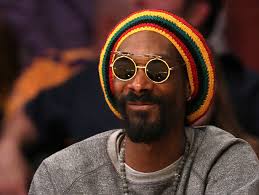 But Snoop Lion was indeed reborn. Reincarnated even, as his documentary earlier this year suggested. Last week, I heard his new song, No Guns Allowed. It's about senseless killing and the mistreatment of human life and how we need to take positive action to avoid all of this. Peace and love, from the Dogg Father.
My first impression?
Snorts.
Eye-rolls.
Murmuring.
Who does this guy think he is? Is this not Dr. Dre's apprentice, a thug?
The thing is, if he were some new artist I would have thought something like "This is good; we need more positive messages like this coming out of mainstream hip hop." But BECAUSE I AM FAMILIAR WITH HIS PAST, I have an inflexible mental template, an antiquated notion about his sincerity and his motivations. If he had the exact same past and I wasn't familiar with it, I would have likely been immediately on board. This reveals my familiarity and attachment to his past are the issue, not the present he may very well be trying to live in genuinely.
All his self-righteous former fans are his home town. And he will have a hard time receiving honor from us. But we are the issue, not him.
They say love is blind. But as the late great Anthony DeMello pointed out, there is nothing so seeing as love. What blinds us is our templates about what people are. We fix them in time within our minds. For years we see the same person and we think down beneath clearly thought words, thats the guy who hurt me. That's that woman who lied. Those are the people who believe this. This is nothing like love. I wouldn't feel loved if people still judged me based on things I did in 1992. I would hope they would remain ever aware - seeing!- that we are all changing, all the time. To love someone is to see the person in front of you, not the template of that person you have created for your own records. To hope and believe all things about each other, rather than log deficits and refuse to ever see past them.
Jesus didn't have a shady past like Snoop or you or the person about which you made your mind up long ago. But the issue isn't the past of the one being judged. Whether the person is a sinless Messiah or the man that made Gin and Juice popular, their past isn't the issue. It's you and I, the judges. Honor is due everyone. Seeing them, and not our presuppositions of them, is perhaps one of the primary ways we pay them this honor. Not merely some vague idea of respect from a distance, but an engaged willingness to re-see each other as an act of love. To start over and over and over with each other, just as we would want them to do for us.
When we're willing to see Christ beyond our old notions, we're blessed. If we won't, we're not. And the same is true for all people, as Christ demonstrates in his refusal to believe anyone is stuck in their worst day.
That is to say, you and I and Snoop Lion are invited into rebirth, it turns out, chronically. (Boom).
These were Jesus' own words when he went home. Up to this point in Mark, Jesus had amassed quite a following, with things added to his resume such as, "healed the first pope's mother in law", "effectively shushed a storm" and "de-legioned a man's mind". All this in addition to his profound teaching and his confronting the misuse of power from within his own tradition. Everywhere he went, he found respect and honor.
But when he got home, things changed. Perhaps at first a slight novelty hung in the air for Jesus as he stood in the synagogue he likely spent all of his childhood Saturdays. There may have even been some eager reunions and embraces. Jesus is home! But as he began to teach and bring the message he lived/died to communicate, there were suddenly snorts. Eye-rolls. Murmurings. Who does this guy think he is? It may have become embarrassing for him in front of his disciples who glanced at each other, unsure what they were experiencing. As Jonathan taught Sunday, there were accusations and derision in the words of his fellow townies when they spoke of him.
"Jesus began to teach in the synagogue. And many hearing him were taken aback, saying, “Where did this man get these teachings? ... Isn't this the carpenter, Mary's son...?” So they were offended ("skandalizo") at Him." Mark 6:2-3
Back then, you referenced a man's father, not the mother, when you're discussing his origins. Unless of course the identity of the father was a matter of dispute. Remember, Jesus's dad was God, and Mary was impregnated miraculously. Easy for us to celebrate every Christmas. Harder to sell as your own story to your village known to have a low view of liars and adulterers. Where does this confirmed bastard get off preaching about God's Kingdom to us?
The text goes on to say that their perception of him actually affected his ability to do what he came to do. This is a fascinating situation. The one who can cast out a thousand demons and erase a storm with a word cannot work in the midst of antiquated notions about himself. It's almost as if our estimates of a person are the dominant determiner of whether we can be blessed by that person.
I am willing to admit that I pumped Dr. Dre's Chronic Album through 15" subwoofers in my Mazda 626 in 1992. This was our introduction to the rapper Snoop Dog, the perpetually (chronically?) high
As the story goes, Snoop Dog had something of a spiritual awakening in Jamaica last year, announcing in July that a Rastafarian Priest had told him he was no dog, but was a lion. Thus, Snoop Lion was born. I thought it was a joke. Then I realized rappers do this. Puff Daddy is on his 27th name I believe.
My first impression?
Snorts.
Eye-rolls.
Murmuring.
Who does this guy think he is? Is this not Dr. Dre's apprentice, a thug?
The thing is, if he were some new artist I would have thought something like "This is good; we need more positive messages like this coming out of mainstream hip hop." But BECAUSE I AM FAMILIAR WITH HIS PAST, I have an inflexible mental template, an antiquated notion about his sincerity and his motivations. If he had the exact same past and I wasn't familiar with it, I would have likely been immediately on board. This reveals my familiarity and attachment to his past are the issue, not the present he may very well be trying to live in genuinely.
All his self-righteous former fans are his home town. And he will have a hard time receiving honor from us. But we are the issue, not him.
They say love is blind. But as the late great Anthony DeMello pointed out, there is nothing so seeing as love. What blinds us is our templates about what people are. We fix them in time within our minds. For years we see the same person and we think down beneath clearly thought words, thats the guy who hurt me. That's that woman who lied. Those are the people who believe this. This is nothing like love. I wouldn't feel loved if people still judged me based on things I did in 1992. I would hope they would remain ever aware - seeing!- that we are all changing, all the time. To love someone is to see the person in front of you, not the template of that person you have created for your own records. To hope and believe all things about each other, rather than log deficits and refuse to ever see past them.
Jesus didn't have a shady past like Snoop or you or the person about which you made your mind up long ago. But the issue isn't the past of the one being judged. Whether the person is a sinless Messiah or the man that made Gin and Juice popular, their past isn't the issue. It's you and I, the judges. Honor is due everyone. Seeing them, and not our presuppositions of them, is perhaps one of the primary ways we pay them this honor. Not merely some vague idea of respect from a distance, but an engaged willingness to re-see each other as an act of love. To start over and over and over with each other, just as we would want them to do for us.
When we're willing to see Christ beyond our old notions, we're blessed. If we won't, we're not. And the same is true for all people, as Christ demonstrates in his refusal to believe anyone is stuck in their worst day.
That is to say, you and I and Snoop Lion are invited into rebirth, it turns out, chronically. (Boom).
Thursday, April 4, 2013
Can I get a withness?
St. Matthew decides to end his gospel in what seems at first to be a most unsatisfactory way. After describing a newly resurrected Christ as commissioning the disciples to go demonstrate the life of God to everybody everywhere, he quotes Christ as saying,
"And surely I am with you always, to the very end of the age.”
That's the last sentence. The end. No explanations for the suffering they would endure. No further answered questions to bolster their confidence in the mission they'd just been assigned. Not even a secret code or formula to make their coming experiences easier than their pagan counterparts. The last words Matthew writes aren't merely theological. They're experiential.
I spoke to a woman this past weekend who, two years ago, was diagnosed with ovarian cancer. I remember when she found out. I remember references to a baseball sized tumor, other lesions and a pervasive sense of fear for her and her family. I remember her tears at the office as she told us. Though feeling "petrified", she opted to undergo chemo and to take every step she knew to take.
She experienced numerous awe-inspiring moments through the course of her treatment. But the one she shared with me Saturday was particularly amazing. When she was at her worst (apparently the treatments are cumulative, and by the sixth the suffering was at its peak), she had the very real, tangible sense of Christ being with her. She conceded that her head was a bit fuzzy from the medications that day, but went on to describe her sitting in her misery and suddenly mindful that Christ was at her side.
And not the blue-eyed, VO5 Hot Oil Jesus depicted in the painting we all had hung in our childhood kitchens. She described him as just as bald as she was, with a chemo port oozing in his chest.
Not just there observing her, but with her. Fused to her suffering with his own.
She didn't quote him. She didn't share with me any of his promises about how much longer the pain would last, or what "lesson" she was supposed to be learning. Apparently there were no words. Just Christ the fellow chemo-patient, with her always, even to the end of the age.
After telling me this, her eyes glossy and wistful, she said, "I miss that. I really do." She scrunched her face up so as to acknowledge first how untrue that probably seemed. Who legitimately misses hell? But I knew she meant it. She missed the profoundly real, wordless presence. The withness, even though it occurred in the midst of great suffering.
We come to a point where our faith is well informed, and yet vacant. Many of us assume this means we've learned what we can about our faith, and have grown past it somehow. We refer to ourselves as "off track" or having "lost our fire". But this is because without Matthew's last sentence, the other words are just history to be learned and then shelved. The informing part of our faith is similar to how the gospel starts and carries on for a time. We feast on insights and inspiration. Eventually, however, when the words end, it's that last sentence that we live on. It's the last one we can't live without.
The presence of Christ is an unearned reality. Underneath our preoccupations, underneath our complicated steps to "find God", even under our reams of Biblical savvy, Christ waits for us to wake up to the fusion that already is. Suffering is a great tuner, as my friend would tell you. But the recognition that we're unaware and even skeptical is enough to begin. When we've taken in the story, we're not just commissioned to tell it. We are then invited to actually participate in it with the Author.
Experientially.
Always.
Enjoy.
"And surely I am with you always, to the very end of the age.”
That's the last sentence. The end. No explanations for the suffering they would endure. No further answered questions to bolster their confidence in the mission they'd just been assigned. Not even a secret code or formula to make their coming experiences easier than their pagan counterparts. The last words Matthew writes aren't merely theological. They're experiential.
I spoke to a woman this past weekend who, two years ago, was diagnosed with ovarian cancer. I remember when she found out. I remember references to a baseball sized tumor, other lesions and a pervasive sense of fear for her and her family. I remember her tears at the office as she told us. Though feeling "petrified", she opted to undergo chemo and to take every step she knew to take.
She experienced numerous awe-inspiring moments through the course of her treatment. But the one she shared with me Saturday was particularly amazing. When she was at her worst (apparently the treatments are cumulative, and by the sixth the suffering was at its peak), she had the very real, tangible sense of Christ being with her. She conceded that her head was a bit fuzzy from the medications that day, but went on to describe her sitting in her misery and suddenly mindful that Christ was at her side.
And not the blue-eyed, VO5 Hot Oil Jesus depicted in the painting we all had hung in our childhood kitchens. She described him as just as bald as she was, with a chemo port oozing in his chest.
Not just there observing her, but with her. Fused to her suffering with his own.
She didn't quote him. She didn't share with me any of his promises about how much longer the pain would last, or what "lesson" she was supposed to be learning. Apparently there were no words. Just Christ the fellow chemo-patient, with her always, even to the end of the age.
After telling me this, her eyes glossy and wistful, she said, "I miss that. I really do." She scrunched her face up so as to acknowledge first how untrue that probably seemed. Who legitimately misses hell? But I knew she meant it. She missed the profoundly real, wordless presence. The withness, even though it occurred in the midst of great suffering.
We come to a point where our faith is well informed, and yet vacant. Many of us assume this means we've learned what we can about our faith, and have grown past it somehow. We refer to ourselves as "off track" or having "lost our fire". But this is because without Matthew's last sentence, the other words are just history to be learned and then shelved. The informing part of our faith is similar to how the gospel starts and carries on for a time. We feast on insights and inspiration. Eventually, however, when the words end, it's that last sentence that we live on. It's the last one we can't live without.
The presence of Christ is an unearned reality. Underneath our preoccupations, underneath our complicated steps to "find God", even under our reams of Biblical savvy, Christ waits for us to wake up to the fusion that already is. Suffering is a great tuner, as my friend would tell you. But the recognition that we're unaware and even skeptical is enough to begin. When we've taken in the story, we're not just commissioned to tell it. We are then invited to actually participate in it with the Author.
Experientially.
Always.
Enjoy.
Subscribe to:
Posts (Atom)